








House renovation and front door upgrades
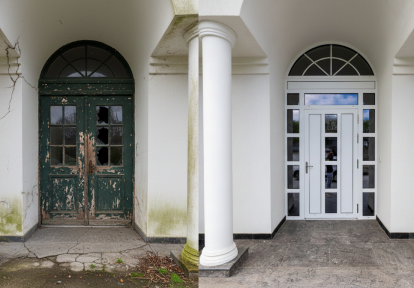
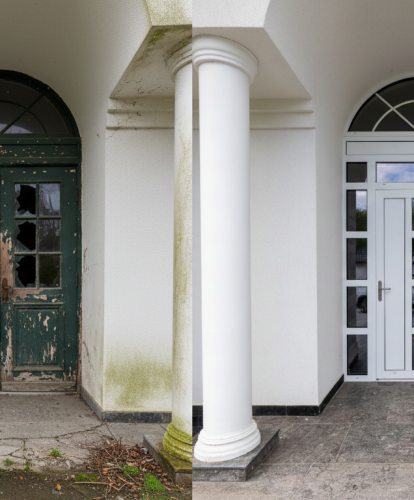
Any house renovation that aim s to balance original craftsmanship with modern standards must treat the entrance as a priority. In many older properties, the front door is a weak point for heat loss, impacting the heating system and increasing energy usage. Replacing it early in the building work helps create a more secure and weather-tight structure before work progresses inside.
Renovators often need to navigate planning permission or planning restrictions, particularly in a conservation area, to ensure the updated door respects the style of properties nearby. A building survey prepared before the renovation work begins helps clarify the structural condition of the doorway, lintels, and thresholds, ensuring that replacement is safe, practical, and compliant.
House renovation project essentials for the entrance
Within a broader house renovation project, a high-performing front door solves several challenges typical of old buildings. Whether the property is a terraced house, a cottage, or a period house, modern insulated doors prevent draughts, reduce noise, and create a warmer living area.
The door selected should support the wider step by step guide set out by the right architect, interior designer, or project management specialist. A well-designed entrance enhances spatial planning, allowing the hallway to have better natural light and more consistent temperatures. These improvements also reduce renovation costs associated with later corrections.
House renovation costs and choosing cost-effective entrance solutions
When analysing house renovation costs, the front door may seem a small detail, but it has a powerful return on investment. Modern doors significantly improve insulation, reducing the demand on central heating and lowering both usage and monthly expenses. They also help homeowners save money by eliminating the hidden costs that arise from repeated repairs to an ageing frame.
Typical expenditure varies depending on materials, glazing, security features, and the surrounding renovation work. While not usually associated with loft conversion cost, garage conversion, or bathroom renovation, the front door directly affects the home’s overall comfort. Establishing a clear idea of the overall budget, including a realistic contingency fund, ensures that the entrance does not become an overlooked component later in the project.
| Feature | Old Timber Door | Modern Insulated Door |
|---|---|---|
| Heat retention | Poor | Excellent |
| Noise reduction | Low | High |
| Security | Basic | Multi-point locking |
| Maintenance | High | Minimal |
| Style options | Limited | Customisable |
Central heating efficiency supported by a modern entrance
A poorly performing front door undermines even the most efficient central heating system. Whether upgrading to a heat pump, installing a new boiler, or improving radiators on the ground floor, eliminating draughts at the entrance creates immediate thermal stability.
An insulated, airtight door acts as a buffer between the exterior weather and the interior living space. This helps reduce renovation costs in the long term and maximises the performance of modern heating technologies. Homeowners working with a structural engineer can also ensure the installation meets the requirements of an upgraded heating system.
Home renovation project and front-door integration
In any home renovation project, the front door should be selected early to align with all complementary works: façade updates, roofing, and new roof installations, as well as guttering and soil pipes repositioning. Coordinating these tasks ensures the entrance fits seamlessly into the renovated envelope and maintains a dust free installation area.
Ensuring the door supports fire safety, locking systems, and aesthetic goals set by the interior design and exterior layout helps future-proof the property. For homeowners considering self build extensions or garage conversion adaptations, a consistent door design enhances visual unity and practical function.
Home's energy efficiency improved through the entrance
Improving the home's energy efficiency is one of the best arguments for upgrading the front door. Quality insulation, advanced seals, and glazing technologies help meet the expectations of local planners, the local council, or the local authority, especially in regulated zones.
Better entrance insulation strengthens the whole building envelope, reduces renovation costs, supports energy efficiency, and contributes to compliance with planning permission process, permitted development, and broader planning process guidelines.
Ground floor updates and entrance transformation
Updating the ground floor often includes flooring, walls, or window replacements around the entrance. This is an ideal time to integrate a secure and visually striking door that matches adjacent joinery. Choosing a design inspired by period features but improved for durability and performance allows renovators to respect the existing building while introducing contemporary standards.
Working with an estate agent during a sale or long-term house renovation plans confirms that a high-quality entrance can significantly increase perceived value and accommodate the ceiling price of the area.
Dream home and the perfect front door
Creating a dream home relies on uniting aesthetics, security, and performance. A well-chosen front door offers a welcoming atmosphere while defending against weather, noise, and intrusion. Whether aiming for traditional charm or modern minimalism, symmetry, glazing, material choice, and hardware all influence the final effect.
Front doors also support the lifestyle made possible by extra space gained through extensions, loft conversions, or improving the living space through insulation upgrades.
Garage conversion and matching the front entrance
Where a garage conversion forms part of the renovation, selecting a complementary front door is essential to achieve a unified architectural expression. Matching materials, finishes, and colours with the garage frontage not only produces a balanced façade but also reinforces the property’s overall visual coherence. A well-chosen door can subtly echo design motifs or lines found in the converted garage, creating a sense of continuity between the original and newly adapted spaces.
Moreover, integrating the entrance into the broader exterior scheme helps enhance kerb appeal, making the home appear thoughtfully renovated and carefully considered from the street. This careful alignment supports both aesthetic and functional goals, as it ensures that the entrance feels intentional rather than an afterthought, strengthening the harmony between the home’s old elements and contemporary interventions. Even small details, such as door hardware or panel styles, can significantly contribute to this cohesive look, leaving a lasting impression on visitors and potential buyers alike.
Energy efficiency and the modern door
Modern front doors significantly enhance overall energy efficiency, especially in renovated homes where older entrances often allow heat to escape. A well-insulated door with quality seals helps stabilise indoor temperatures and reduces the load placed on the heating system, lowering the costs involved in day-to-day heating. By preventing draughts at the most common point of heat loss, homeowners can achieve measurable savings without major structural changes.
These improvements align with the typical costs associated with other sustainable upgrades and support the long-term performance of the home. For many older properties, replacing a draughty timber door is one of the most cost effective ways to reduce heat loss during a renovation. Even in areas with stricter aesthetic expectations, such as a conservation area, modern front doors can combine traditional detailing with contemporary performance, helping the home meet today’s standards while retaining its architectural character.
Extra space and the welcoming entrance
In many older British and Irish homes, renovating the entrance area often reveals unused or poorly arranged space around the doorway. Introducing a modern front door allows this zone to be reorganised more effectively, creating a clearer, more functional threshold between the outdoors and the refurbished interior. Contemporary doors often feature slimmer frames, improved opening systems, and optional side or top glazing, helping the entrance feel more open and naturally lit without altering the building’s structure.
A redesigned entrance with a high-quality door enhances comfort and practicality, particularly in homes where the hallway traditionally feels narrow or dim. By improving insulation, reducing draughts, and providing a visually refined focal point, the new door adds both perceived and actual spaciousness. Thoughtful choices in colour, finish, and hardware further reinforce the welcoming character of the renovated property, ensuring the entrance aligns with the home’s updated style and modern standards.